Manual Physical Inventory While it may be accurate (and I say MAY ), is a Manual Physical Inventory the right way? Best practices would say absolutely not! The better way is implementing Cycle Counting. Why Cycle Counting instead of a full physical inventory? With a cycle count, the count focuses on a selected range of… […]
Read More… from Infor LN & Baan | Infor LX & BPCS Tip: Time for the dreaded three words?
The Infor LX system supports 4 levels of inventory. You can view summaries of stock at each level through the Material Status Inquiry program or through reports. Below are the 4 levels: Item Item + warehouse Item + warehouse + location Item + warehouse + location + lot The lot number level and/or container of… […]
Read More… from Infor LX & BPCS Tip: Inventory Stocking Levels – Warehouses, Locations and Lots…Oh My!
The Infor Development Framework (IDF) re-architects the way a user interacts with the application, providing an efficient, task-oriented process to view application information that is contained within Infor LX. IDF enables users to configure their view of the application data without modifying the core application and its supportability. The examples below describe how users can… […]
Read More… from Infor LX & BPCS Tip: Main Benefits of IDF?
Infor’s Intelligent Open Network (ION) technology easily integrates Infor ERPs and third-party enterprise systems. ION is an advanced middleware cloud platform that provides the flexibility you need to make the most complex web of enterprise systems work together on-premise, in the cloud, or both. ION’s long-term sustainability will optimize your ROI, and with ION, one… […]
Read More… from Infor LX & BPCS Tip: Infor ION – What is ION, and why do I need it?
Display Customer Type on Order Header Panel – 8.4. Enhancement This enhancement displays the Customer Type on the Order Header – Billing panel. The Customer Type can be a pricing or promotion qualifier and may convey other important information about the ordering customer during the Order Entry process. Programs or areas impacted include: Order Header… […]
Read More… from Infor LX & BPCS Tip: Customer Type
This enhancement allows users to restrict access to purchase order print programs, providing additional security at the company and warehouse levels. The purchase order print programs were updated to provide security validation for the user who selects the purchase orders to print. The security validation is controlled by the PO Print Security Validation flag on… […]
Read More… from Infor LX & BPCS Tips: Purchase Order Print Security Validation
The Customer Tax Exemption Maintenance program, SYS160, allows you to specify customer declarations used by the Customer Order Entry (ORD) and Billing (BIL) applications to apply a tax rate code to specific order lines of an invoice. With this program, Infor LX can invoice customers without value-added tax (VAT) if one of the following conditions… […]
Read More… from Infor LX & BPCS Tip: Customer Tax Exempt Declarations, SYS160D1
This program allows maintenance of vendor terms, which you individually assign to each vendor. Vendor terms designate the due date and the discount date as a number of days after the invoice date. You establish the discount percentage here. Vendor terms are stored in the AVT file. Rather than use the method specified above, you… […]
Read More… from Infor LX & BPCS Tip: Vendor Terms Maintenance, ACP160D1
Use this program to enter period overhead expenses to distribute to various work centers. You can set up this overhead cost allocation on either a per-hour or a per-piece basis, depending on the overhead allocation type specified for each work center on the Work Center Maintenance screen, CAP100D2-01. The system spreads the amounts entered across… […]
Read More… from Infor LX & BPCS Tip: Overhead Costs – CST120D1
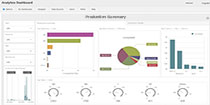
In order to communicate effectively as a team, everyone needs to speak the same language and operate off the same playbook. If decisions are made based on the data or the view of data that individuals are maintaining through their own spreadsheets or other data silos, then communication is negatively impacted. Manufacturers need to review… […]
Read More… from Infor LX & BPCS: BIG DATA – Keeping Track of Key Metrics